A Ptc Heater can look simple on a product sheet. Choosing the right one takes more care. Global buyers must compare operating voltage, rated power, dimensions, airflow, temperature limits, and the conditions where the heater will run. A compact unit may fit the housing yet deliver too little heat. A higher rating may create new demands on wiring, controls, or airflow. Small details matter.
This guide explores seven practical checks, from matching the heater to its application to reviewing supplier documentation and production consistency. Look for clear test data, material details, sample availability, and realistic lead times. Ask how performance was measured. Confirm that the proposed model suits your operating environment, not just your target price. No checklist catches everything.
For transparency, the following is an illustrative line from a fictional composite expert, PTC heater engineer Elena Park—not a verified quotation: “Choose for the real operating conditions, not the neatest specification sheet.” It captures a useful buyer habit. Specifications need context. A datasheet cannot show every installation challenge, and supplier assurances deserve careful review. The right questions may reveal gaps before a sample reaches your workshop. Use these tips to compare offers with greater confidence, while leaving room to reassess assumptions when test results or application details change.
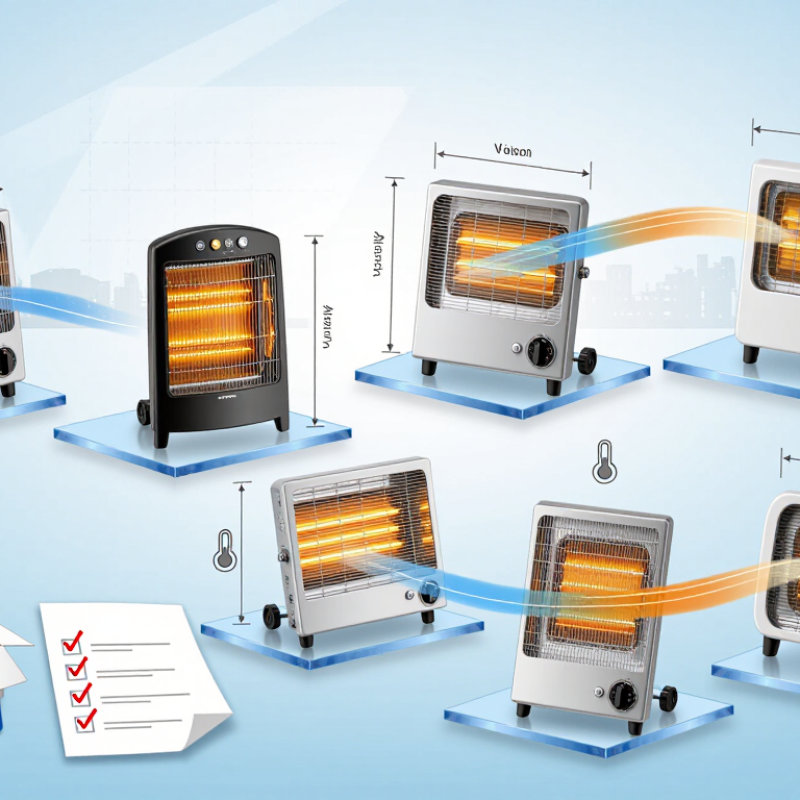
Define the job before comparing PTC heater wattages. Is the unit warming moving air, preventing condensation, or holding a metal enclosure above a minimum temperature? Record the coldest startup temperature, target temperature, airflow, available voltage, and warm-up time. Small details matter: a heater beside a fan behaves differently from one installed in a still-air cabinet. Include heat loss through the enclosure and openings, not just the volume of air.
The U.S. Energy Information Administration’s 2020 Residential Energy Consumption Survey reports that space heating accounted for about 42% of residential site energy use. This is not a PTC sizing rule, but it shows why heating demand deserves careful attention. Estimate the required heat load, then check the heater’s output at the actual voltage, airflow, and operating temperature. A catalogue’s peak wattage alone can mislead. Check whether the supplier’s test conditions match yours. Ask for temperature-rise curves and confirm how the heater is mounted. Small airflow changes can matter. There is some uncertainty in early estimates; prototypes may reveal uneven heating or slower warm-up than expected. Measure temperatures at several points, including near the outlet and the coldest surface, before finalizing the specification.
Start by describing where the heater will operate and what it must heat. The examples below are planning prompts, not universal product specifications; confirm final ratings through system-level thermal and safety testing.
| Tip | What to define | Example requirement | Why it matters |
|---|---|---|---|
| 1. Identify the application | State whether the heater warms moving air, a liquid, a surface, or an enclosed space. Describe the equipment and how the heater is installed. | Air heating in a compact ventilation duct, with the heater mounted downstream of a fan. | Heater construction, airflow path, insulation, mounting, and protection requirements depend on the application. |
| 2. Set the heating target | Specify the desired temperature at a defined measurement point, such as the outlet air, heated surface, or enclosure interior. | Raise outlet-air temperature from the measured inlet condition to the system’s specified setpoint. | A clear measurement location avoids confusing heater element temperature with the temperature delivered to the application. |
| 3. Describe operating conditions | Provide minimum and maximum ambient temperatures, inlet temperature, humidity or moisture exposure, altitude where relevant, and expected duty cycle. | Outdoor equipment with variable inlet temperature and intermittent heating cycles. | Operating conditions affect heat loss, warm-up time, material selection, and the validation needed for reliable operation. |
| 4. Define airflow or flow rate | For air heaters, give airflow and duct dimensions. For liquid systems, give the fluid, flow rate, and operating pressure. | Provide the expected airflow range and note whether airflow can stop while the heater is energized. | Heat transfer depends on flow. Low or interrupted airflow can cause different temperatures and requires appropriate system safeguards. |
| 5. Calculate required heating capacity | Estimate the heat needed for the target temperature, warm-up time, flow rate, and heat losses. Specify the available supply voltage and frequency. | Request a capacity assessment using the actual operating conditions rather than selecting a heater from physical size alone. | Required power varies with the system. A qualified thermal calculation and prototype testing help verify that the chosen heater can meet the target. |
| 6. Specify control and protection | Describe temperature sensing, switching or power control, allowable temperature limits, and required independent safety devices. | Use a system temperature sensor and evaluate overtemperature protection for the installed arrangement. | PTC elements tend to reduce their power as their temperature rises, but this behavior does not replace application-specific controls or safety protection. |
| 7. Check installation and compliance needs | Provide available space, mounting orientation, electrical connection details, expected service environment, and destination-market requirements. | Confirm clearances, wiring and connector requirements, enclosure conditions, and applicable electrical and product safety standards before production. | Early review can reveal fit, integration, documentation, and compliance issues before the design is finalized. |
Match the heater to what needs warming. A bare ceramic element may fit a compact assembly. A fan-assisted unit can move warm air through a small cabinet. Surface heating is different. The heat path matters.
Consider the target temperature, panel heat loss, airflow, and warm-up time. Check voltage and wattage against the power supply. A higher rating is not always better. It can make temperature control harder.
Confirm mounting points, clearances, connector location, and included controls or sensors. Leave room for air circulation. Check that nearby materials can tolerate the heat. Small gaps matter.
Two heaters with similar wattage may differ in size, operating limits, or performance in cold starts. Ask for a datasheet with test conditions. Estimates can still miss real heat loss.
Check over-temperature protection, insulated wiring, and stable feet. Tip-over shutoff may matter for some setups. Review test evidence for abnormal operation and accessible surface temperatures. Details count.
Request certificates and full test reports for the exact model and configuration. Confirm the voltage, issuing body, and test scope. A certificate alone is not the whole story.
Verify local requirements, labeling, plug type, language, and importer documents. A mark accepted in one market may not be accepted in another. Paperwork can be messy.
Keep batch records, test evidence, and supplier declarations. Ask how failed units are handled. A thermostat change may affect test coverage, so request written confirmation. I would still test a prototype in the actual assembly.
Choosing a Ptc Heater for international use starts with understanding the application: the operating environment, required temperature, heating speed, and expected duty cycle. These requirements help narrow down the appropriate heater type, dimensions, and configuration, ensuring the unit can fit the equipment and deliver consistent performance. Buyers should also review built-in safety features and confirm that relevant certifications and market requirements are appropriate for the intended destination.
A reliable purchasing decision involves more than comparing unit prices. Assess the supplier’s quality controls, ability to accommodate practical customization, and capacity to meet production schedules. Then compare the total cost, including packaging, shipping terms, and any ongoing support. Clear communication about specifications, delivery expectations, and after-sales service can help prevent misunderstandings and make it easier to select a heater that meets both technical needs and budget priorities.

 ANHAN TRADE