China Top Small Electric Water Pump Manufacturers

Time:2026-10-15 Author:Isabella
0%

China has become a major sourcing base for compact water movement equipment. Its small electric pump factories serve aquariums, fountains, cooling systems, medical devices, and household appliances. Yet factory names alone prove little. Buyers need evidence.

This guide examines China’s top Small Electric Water Pump manufacturers through practical purchasing criteria. We consider pump structure, flow stability, voltage options, noise levels, sealing quality, and motor lifespan. We also review production experience, testing procedures, certifications, customization capacity, and export support. A reliable supplier should explain performance using measurable data, not polished claims. Ask for flow curves, head pressure results, material specifications, and sample testing records. Clear answers matter.

Hands-on evaluation often reveals details that brochures miss. A pump may run quietly at first, then heat after several hours. A thin cable, weak connector, or uneven impeller can create service problems. Small differences matter. We therefore compare samples, factory communication, quality controls, and after-sales responsiveness. The ranking is not absolute. Application conditions can change the best choice. A pump for a tabletop fountain is not automatically suitable for continuous industrial circulation. Some information may remain difficult to verify without an independent audit. That limitation deserves attention. By combining technical review with supplier due diligence, this article helps importers, engineers, and distributors make more defensible decisions when selecting Chinese manufacturers.
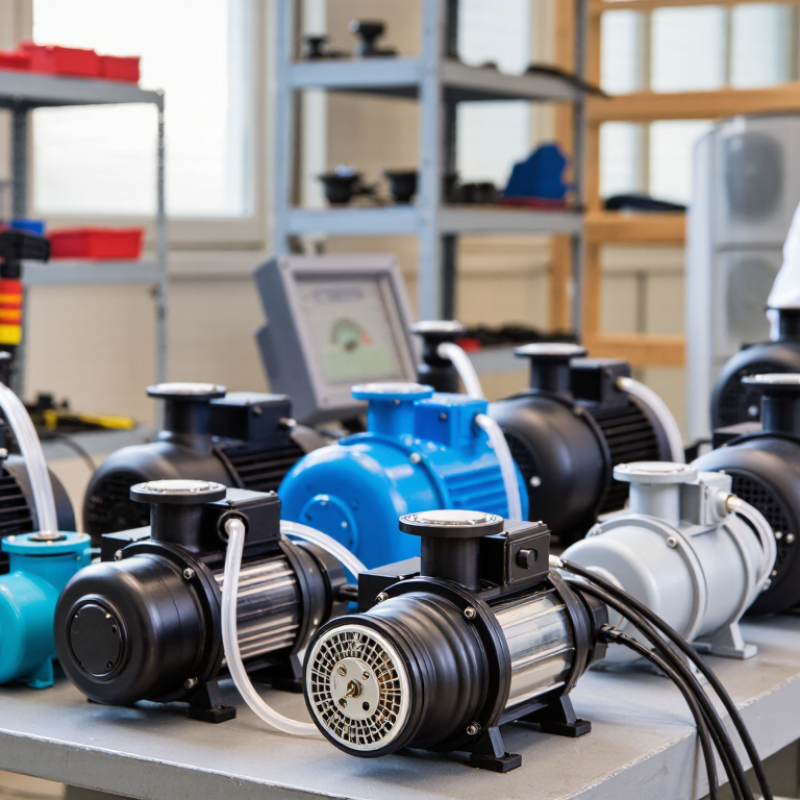
China Top Small Electric Water Pump Manufacturers

Small Electric Water Pumps Defined: 12–24 V, ≤100 W, and 5–40 L/min

China Top Small Electric Water Pump Manufacturers

Small electric water pumps are usually defined by three practical limits: 12–24 V power, no more than 100 W, and flow rates from 5 to 40 L/min. These specifications suit vehicle cooling loops, laboratory equipment, aquariums, portable cleaners, and compact circulation systems. A 12 V model may fit mobile equipment, while 24 V versions often support longer cable runs with reduced current. However, voltage alone does not determine performance. Head height, hose diameter, fluid temperature, and filter resistance can sharply reduce actual flow.

Reliable manufacturers in China should provide measured pump curves, electrical test records, and clear material specifications. During inspection, check the rated current, connector quality, impeller balance, and sealing around the motor housing. A pump rated at 40 L/min may deliver much less through narrow tubing or a raised outlet. That detail is easy to miss. Test units under the real working height, not only in an open container.

Energy use also matters. A pump below 100 W can still create heat in a sealed enclosure, especially during continuous operation. Look for dry-run protection only when the design genuinely supports it. Some low-cost samples perform well initially but become noisy after repeated starts. This deserves attention. A practical supplier should explain service life, noise levels, inspection tolerances, and replacement parts without vague promises. Certification documents should match the exact model, not a similar product.

China’s Top Manufacturers: ISO 9001 Systems, OEM Capacity, and Export Reach

China Top Small Electric Water Pump Manufacturers

China’s strongest small electric water pump manufacturers are building around controlled systems, not only low prices. The ISO Survey 2023 recorded more than 1.2 million ISO 9001 certificates worldwide. For buyers, this signals documented procedures, traceability, and corrective action. It does not guarantee every pump performs well.

A reliable factory should show incoming motor checks, impeller inspections, leak testing, and final electrical testing. Ask for calibration records and batch reports. Export capability also matters. UN Comtrade data under HS 8413 places China among the major global pump exporters, although this category includes many pump types. That limitation matters. A supplier may have export experience without understanding compact household applications. Request samples from the same production line, not a special demonstration unit.

Tips: Compare the rated flow, head pressure, voltage, noise, and duty cycle. Check whether test values use clean water at a stated temperature. Ask how rejected units are recorded.

ISO 9001 is useful, but factory evidence is stronger. A recent Interact Analysis report identifies continued automation and smart manufacturing investment across industrial equipment production. However, smaller suppliers may still rely on manual assembly. That is not automatically poor practice, but it deserves closer inspection.

I would also verify OEM tooling ownership, packaging controls, spare-part availability, and export documents before placing a large order.

Pump Technologies Compared: Brushless DC, Diaphragm, and Centrifugal Designs

China’s small electric water pump manufacturers increasingly compare brushless DC, diaphragm, and centrifugal designs. Start with duty, not catalog size. The IEA reports that electric motor systems consume about 53% of global electricity. Pump efficiency therefore deserves serious attention. The U.S. Department of Energy also identifies pumping systems as major industrial energy users, sometimes consuming 25% to 50% of site motor energy.

Brushless DC pumps suit portable equipment, dosing units, and battery systems. Their permanent-magnet motors provide quiet operation, compact packaging, and efficient variable-speed control. Electronic controllers add cost and require protection against heat, moisture, and dry running.

Diaphragm pumps create steady pressure at lower flow rates. They self-prime well and handle air more confidently. Their pulsating output can disturb sensitive spray or filtration systems. Membranes and valves also wear, especially with abrasive water. Small details matter.

Centrifugal pumps remain practical for clean water and continuous circulation. They deliver smoother flow, but performance falls quickly with air, high viscosity, or poor priming.

DOE pump guidance recommends matching the operating point with the pump curve, rather than choosing maximum rated flow. That advice is often ignored. A laboratory result may look excellent, yet a narrow inlet or undersized cable can ruin field performance.

Testing should record flow, pressure, power draw, noise, and temperature under real duty cycles. The comparison is not perfectly clean; controller quality and installation can change the result as much as pump architecture.

Selection Metrics: Flow, Head, IP Rating, and IEC 60335-2-41 Compliance

China Top Small Electric Water Pump Manufacturers

Selecting a small electric water pump should begin with the duty point, not the catalogue headline. Flow describes delivered water volume, while head shows pressure capability. Ask manufacturers for tested performance curves, not only maximum figures. A pump rated at 20 L/min may reach that flow at almost zero head. Under a 4-meter lift, performance can fall sharply.

The International Energy Agency reports that motor-driven systems consume roughly half of global electricity, making efficiency and correct sizing commercially important.

IP rating is equally practical. IEC 60529 defines protection against solids and water, but IP ratings do not prove chemical resistance or continuous submersion. For outdoor equipment, IP55 may protect against dust and water jets. It may still fail after poor cable sealing.

Confirm the complete assembly, including connectors and the control box. Selection teams should also review noise, insulation class, thermal protection, service life, and traceable test records.

Tips: Compare flow at your real head. Request a signed test curve. Check whether the supplier tests at rated voltage and frequency.

For household and similar applications, IEC 60335-2-41 specifies particular pump safety requirements; verify the applicable edition and product scope before approval. The standard does not replace risk assessment or local certification.

A manufacturer with disciplined sampling, calibrated instruments, and corrective-action records is usually more reliable than one offering the lowest price. I would not trust an impressive datasheet alone; installation losses are often underestimated.

Supplier Evaluation: ISO 9906 Testing, MOQ, Lead Time, and Warranty Terms

When evaluating China’s small electric water pump manufacturers, request an ISO 9906 performance test report, not a general quality certificate. The report should show flow rate, pressure head, power consumption, and testing tolerances. Ask whether measurements came from production samples or a specially selected unit. That difference matters.

During supplier audits, I compare test data with a witnessed sample run. A pump may reach its advertised flow in a clean laboratory, yet lose performance through a narrow hose or unstable voltage. Request the test conditions, calibration records, and video evidence where practical. Keep questions specific. Vague answers create expensive surprises.

MOQ also needs careful discussion. A low MOQ can support market testing, but custom tooling or printed packaging may raise the real minimum. Ask for sample pricing, pilot-order quantities, and the cost of changing specifications. Confirm lead time in writing, including approval, production, inspection, and shipping preparation. For warranty terms, check the coverage period, replacement procedure, excluded conditions, and required failure evidence. One supplier may promise twelve months, but define coverage narrowly. I once overlooked installation requirements, and the warranty dispute delayed a project. That mistake still influences my supplier checklist.

FAQS

When should I choose a brushless DC pump?

Choose it for portable equipment, dosing units, or battery-powered systems. It runs quietly. Variable-speed control can improve efficiency. However, its controller needs protection from heat, moisture, and dry running.

What are the main strengths of a diaphragm pump?

A diaphragm pump suits lower flow rates and steady pressure. It self-primes well and handles air more confidently. Its output pulses, which may disturb sensitive spraying or filtration. Membranes and valves can wear with abrasive water.

When is a centrifugal pump the practical option?

Choose a centrifugal pump for clean water and continuous circulation. It usually provides smoother flow. Performance can drop quickly with air, thick liquids, or poor priming. It is not a universal solution.

How should I compare pump performance?

Compare flow at the actual head, not maximum catalogue flow. A pump rated at 20 L/min may reach that rate near zero head. At a 4-meter lift, its output may fall sharply. Request a tested performance curve.

Which measurements should testing include?

Record flow, pressure, power draw, noise, and temperature. Test under real duty cycles. Use the rated voltage and frequency. A laboratory result alone can mislead.

Does a high IP rating guarantee outdoor reliability?

No. An IP rating mainly addresses solids and water protection. It does not prove chemical resistance or continuous submersion. Check cable seals, connectors, and the control box together. One weak seal may cause failure.

What safety checks should buyers complete?

Review thermal protection, insulation class, noise, service life, and test records. For household and similar uses, check applicable pump safety requirements. Verify the current standard edition and product scope. Local certification may still be necessary.

Is the cheapest pump usually the best choice?

Not necessarily. Installation losses are often underestimated. A narrow inlet or undersized cable can reduce field performance. Calibrated instruments and corrective-action records are valuable signs. I would not trust an impressive datasheet alone.

Conclusion

Small Electric Water Pump systems are compact fluid-handling solutions typically operating at 12–24 V, with power ratings up to 100 W and flow rates of approximately 5–40 L/min. This guide explains how China-based manufacturers support global applications through ISO 9001 quality systems, OEM production capabilities, flexible customization, and established export processes. It also compares brushless DC, diaphragm, and centrifugal technologies, highlighting their differences in efficiency, pressure performance, noise, durability, and maintenance requirements.

For effective product selection, buyers should evaluate flow rate, maximum head, operating voltage, IP protection rating, materials, service life, and suitability for IEC 60335-2-41 requirements. Supplier assessment should include ISO 9906 performance testing, production consistency, minimum order quantity, lead time, technical support, and warranty terms. By reviewing both technical specifications and supplier reliability, customers can choose a safe, efficient, and application-appropriate pump for cooling, circulation, drainage, dispensing, and other low-voltage fluid-control tasks.


Isabella

Isabella

Isabella is a dedicated marketing professional with a sharp focus on driving brand growth and engagement through strategic content creation. With an extensive background in digital marketing, she combines her passion for storytelling with her keen understanding of industry trends to deliver......